

I set out to write this after seeing, yet again, a patient walk in with a bottle of something advertised as a “kidney detox,” a “renal tonic,” or a “natural cure for CKD.” The label usually promises some combination of lowered creatinine, cleaner blood, less inflammation, and “restored kidney function.” It all sounds plausible enough that you can see why people want to believe it. I understood the appeal immediately. CKD is one of those diagnoses that makes people feel cornered. Once they hear that kidney function is falling, they naturally start looking for something, anything, that sounds gentler, safer, and more hopeful than the usual medical language of control, slowing progression, and risk reduction.
Herbal supplements and kidney disease are a difficult combination, because “natural” does not always mean safe for the kidneys. And that is exactly why these claims spread so easily.
They borrow just enough real biology to sound reasonable. Chronic kidney disease does involve inflammation, oxidative stress, fibrosis, high blood pressure, metabolic dysfunction, and protein leakage in the urine. Some plants do contain biologically active compounds that can affect one or more of those pathways in cell studies, animal models, or small human studies. That is the scientific opening through which the marketing enters. [1,2]
But that opening is much smaller than the advertisements make it sound.
The real question is not whether a plant extract can change a lab number, reduce oxidative stress in a rat kidney, or lower urinary protein in a small trial. The real question is whether it has been shown, in good human evidence, to reverse established CKD, preserve kidney function long term, prevent dialysis, or improve survival. [2,3,4]
WHY THE CLAIMS SOUND BELIEVABLE
There is a reason these products are marketed with phrases like “anti-inflammatory,” “antioxidant,” “kidney cleansing,” “renal tonic,” or “supports filtration.” CKD progression is driven by some very real mechanisms, and plant compounds may influence some of them. Reviews in this area repeatedly point to inflammation, fibrosis, and oxidative stress as plausible therapeutic targets. [1]
That is the rational part of the story. The irrational leap comes next. A compound that influences one pathway is suddenly presented as if it restores damaged nephrons, erases scar tissue, or “heals” chronic kidney disease. That is a much bigger claim, and it is the part that the evidence does not support. Chronic kidney disease is not just a high creatinine value floating in the bloodstream. In many patients it reflects long-standing structural injury, glomerular damage (Damaged kidney filters), tubulointerstitial fibrosis (scarring of kidney tissue), vascular disease (altered blood supply to the kidneys), or all of the above. That kind of damage is not undone simply because a supplement label says “detox.” [1,2]
WHAT THE BETTER EVIDENCE ACTUALLY SHOWS
When you move away from advertisements and look at the literature, the tone becomes much more careful.
A 2024 systematic review of randomized clinical trials (The highest echelon of medical ) on plant-based bioactive compounds and medicinal plants in CKD and dialysis patients found some promising leads. Certain compounds appeared to improve inflammatory markers, antioxidant capacity, proteinuria, or cardiovascular parameters in some studies. But the overall conclusion was still cautious. The field is interesting, the biology is plausible, and the results justify more research, but the evidence is not strong enough to claim a cure. [2]
The same pattern shows up with two of the most commonly cited examples, astragalus and cordyceps.
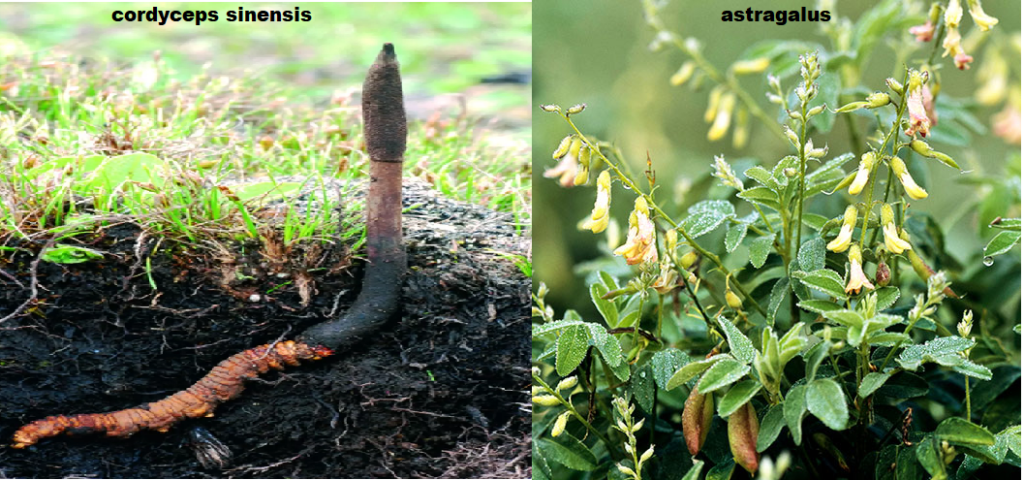
A Cochrane review (Trusted medical evidence) of astragalus in CKD reported possible improvements in outcomes such as proteinuria, blood pressure, albumin, and hemoglobin when astragalus was added to conventional therapy. That sounds encouraging, until you read the rest of the sentence. The trials were limited by poor methodological quality and incomplete reporting, and the reviewers concluded that firm conclusions could not be drawn. [3]
Cordyceps has a similar story. Another Cochrane review found possible improvements in serum creatinine, creatinine clearance, proteinuria, albumin, and hemoglobin when cordyceps preparations were used alongside standard care. Again, interesting signals. Again, weak evidence. Again, no basis for saying that CKD has been cured. [4]
THE INTERNET IS FULL OF CLAIMS, BUT THIN ON REAL EVIDENCE
One study specifically examined online claims about dietary and herbal supplements marketed to patients with advanced kidney disease. Of the 184 websites studied, 28% claimed the products could decrease CKD progression, 60% did not advise patients to consult a doctor first, and more than 90% did not mention possible drug interactions, disease interactions, or cautions for vulnerable groups. The common plant ingredients included things like uva ursi, dandelion, parsley, corn silk, juniper, celery, buchu, horsetail, marshmallow, and stinging nettle. The authors concluded that these substances were not adequately studied in humans and that the animal data raised concerns about adverse effects and interactions. [5]
That, to me, is the heart of the problem. The marketing usually speaks with certainty. The evidence usually does not.
LOWERING CREATININE IS NOT THE SAME AS FIXING CKD
This may be the single most important point in the entire discussion.
Many supplements are sold with some version of the phrase “lowers creatinine.” Even if a study or anecdote reports that creatinine came down, that still does not answer the question patients care about. Did kidney function truly improve in a durable way? Did albuminuria meaningfully fall? Did eGFR remain better over time? Did fewer people progress to kidney failure? Did fewer people need dialysis? Those are the outcomes that matter. [2,3,4]
Creatinine can move for many reasons. Hydration changes, diet changes, muscle mass, laboratory variation, concurrent illness, and other variables can all influence the number. A lower creatinine by itself is not proof that chronic kidney disease has been reversed. This is where a lot of supplement marketing becomes scientifically slippery. It takes a soft surrogate and presents it like a hard clinical outcome.
CAN SOME HERBAL PRODUCTS ACTUALLY DAMAGE THE KIDNEYS?
Yes. Very clearly.
The best-known example is aristolochic acid nephropathy. Aristolochic acid, found in certain herbal preparations, is a well-established cause of rapidly progressive tubulointerstitial fibrosis (Kidney tissue scarring) and chronic kidney damage. It has also been associated with urothelial cancer. This is one of the clearest examples in nephrology that a plant-derived remedy can cause devastating kidney injury. [6]
Once you know that history, it becomes much harder to accept the lazy assumption that “natural” means safe. And aristolochic acid is not the only example.
A well-known case report described a 47-year-old man who developed acute renal failure and liver dysfunction after taking an herbal remedy. Analysis of the remedy found Cape aloes, a recognized nephrotoxin. He required dialysis for several weeks, and his kidney function did not return fully to normal. [7]
Turmeric offers another useful lesson. Many people think of turmeric as almost automatically safe because it is common in food and has a healthy reputation. But concentrated supplementation is not the same thing as using a spice in cooking. A 2024 case report described oxalate nephropathy (Crystal kidney damage associated with kidney stones) in a man with chronic turmeric supplementation. That does not mean turmeric is dangerous for everyone. It does mean that dose, form, and context matter, and that “it comes from a plant” is not a safety argument. [8]
Then there is star fruit. It is often consumed as a natural health product, and in some settings it is promoted for metabolic health. In patients with CKD it can cause severe neurotoxicity (brain damage), and there are also reports of acute kidney injury even in people who previously had normal renal function. A systematic review of star-fruit toxicity in renal patients documented the seriousness of this problem. [9]
So yes, plants can be biologically active enough to help. They can also be biologically active enough to injure.
WHY CKD PATIENTS HAVE LESS ROOM FOR ERROR
Patients with CKD are not dealing with a normal physiologic reserve. Their kidneys already have reduced ability to handle toxins, metabolites, electrolyte loads, and pharmacologic surprises. Add an unregulated supplement, possible contamination, variable dosing, herb-drug interactions, or a hidden nephrotoxin, and the margin for safety narrows quickly. Reviews on herbal nephrotoxicity emphasize exactly this point. The kidney is especially vulnerable to toxic injury, and patients with chronic kidney disease deserve more caution, not less. [6,10]
This is another reason I get uneasy when I hear the phrase “it can’t hurt to try.” In nephrology, sometimes it absolutely can.
SO IS EVERY PLANT-BASED APPROACH TO CKD NONSENSE?
No. That would be too simplistic.
There is real scientific interest here for a reason. Some plant-derived compounds may eventually prove useful as adjunctive therapies. Some may reduce inflammation, oxidative stress, or proteinuria under specific conditions. Some may one day become part of a more evidence-based renal therapeutics conversation. But that is very different from claiming a cure today. [1,2]
The honest scientific position is this: there are plausible mechanisms, there are early signals, and there are a few herbs that justify better trials. What we do not have is convincing evidence that a plant or supplement can reverse established chronic kidney disease in humans.
THE BOTTOM LINE
Can plants or supplements cure chronic kidney disease?
Based on what the better evidence shows right now, no. Some products have interesting mechanisms and some have produced promising early data, especially as add-ons to standard treatment. But none has been proven to cure CKD, reverse chronic structural kidney damage, or replace evidence-based care. [2,3,4]
Can some of these products be dangerous?
Absolutely. Aristolochic acid is the classic example, but it is not the only one. Case reports and reviews involving Cape aloes, concentrated turmeric supplementation, and star fruit make that painfully clear. [6,7,8,9]
So when a website or bottle says that a plant can “clean,” “repair,” or “restore” your kidneys, The right first question should be whether the evidence is strong enough, in humans, to justify the claim. Most of the time, that question brings the excitement down to a level that science can actually support.
References
- Khan MA, Singh VK, Fatima N, et al. Promoting Plant-Based Therapies for Chronic Kidney Disease. Can J Kidney Health Dis. 2022;9:20543581221079688. doi:10.1177/20543581221079688.
- Josa E, Barril G, Ruperto M, et al. Potential Effects of Bioactive Compounds of Plant-Based Foods and Medicinal Plants in Chronic Kidney Disease and Dialysis: A Systematic Review. Nutrients. 2024;16(24):4321. doi:10.3390/nu16244321.
- Zhang HW, Lin ZX, Xu C, Leung C, Chan LS. Astragalus (a traditional Chinese medicine) for treating chronic kidney disease. Cochrane Database Syst Rev. 2014;(10):CD008369. doi:10.1002/14651858.CD008369.pub2.
- Zhang HW, Lin ZX, Tung YS, et al. Cordyceps sinensis (a traditional Chinese medicine) for treating chronic kidney disease. Cochrane Database Syst Rev. 2014;(12):CD008353. doi:10.1002/14651858.CD008353.pub2.
- Vamenta-Morris H, Dreisbach A, Shoemaker-Moyle M, Abdel-Rahman EM. Internet claims on dietary and herbal supplements in advanced nephropathy: truth or myth. Am J Nephrol. 2014;40(5):393-398. doi:10.1159/000368724.
- Zhou Q, Shu G, Wang X, et al. Overview of aristolochic acid nephropathy: an update of the literature. 2023. Review article describing aristolochic acid nephropathy as a rapidly progressive renal interstitial fibrosis caused by exposure to aristolochic acid, with ongoing concern about chronic kidney damage and urothelial cancer risk.
- Luyckx VA, Ballantine R, Claeys M, et al. Herbal remedy-associated acute renal failure secondary to Cape aloes. Am J Kidney Dis. 2002;39(3):E13. doi:10.1053/ajkd.2002.31399.
- Washington O, White C, Yalamanchili P, et al. Oxalate nephropathy and chronic turmeric supplementation: a case report. 2024. Case report describing kidney failure with biopsy-proven oxalate nephropathy in the setting of chronic turmeric supplementation.
- Aranguren C, Oliveira M, Becerra A, et al. Toxicity of star fruit (Averrhoa carambola) in renal patients. Nefrologia. 2017;37(5):491-498. doi:10.1016/j.nefro.2017.03.021.
- Kiliś-Pstrusińska K, Wiela-Hojeńska A. Nephrotoxicity of Herbal Products in Europe: A Review of an Underestimated Problem. Int J Mol Sci. 2021;22(8):4132. doi:10.3390/ijms22084132.